
How to Generate Fitting Room AI Images — Complete Guide
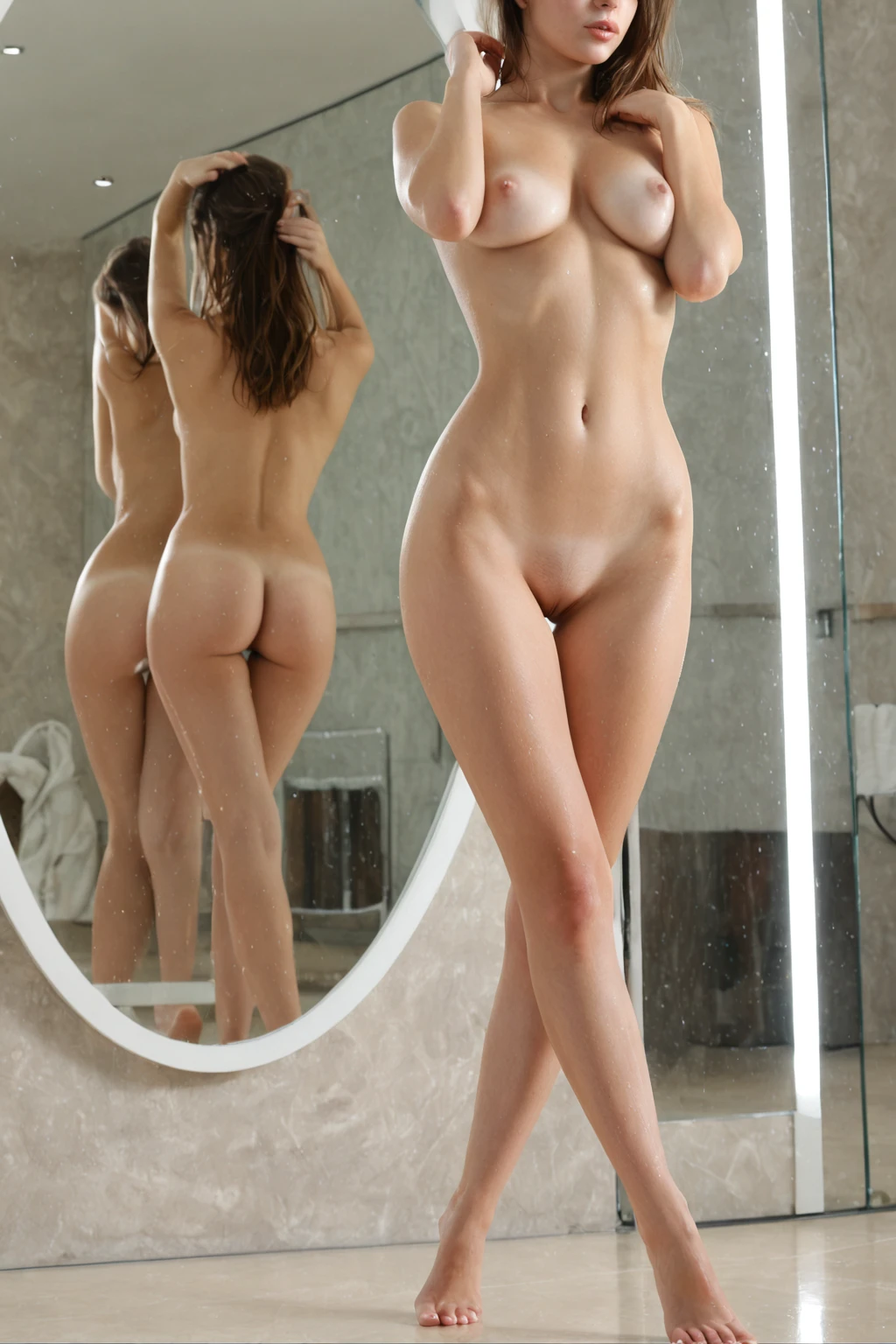
A room barely wider than the bench in it, a rail of half-tried garments, and a mirror tall enough to show hem to heel. That is what the fitting room category is built around: a space made for looking at yourself, photographed as if someone actually stood in it. Nothing is styled for a camera crew. Nothing is lit for a magazine.
You select it on the fitting room page, or from the category list inside the generator, and the description is assembled for you from there.
Fitting Room, Precisely
The category puts the subject inside a clothing store fitting room, keeps a full-length mirror in frame, and holds the framing intimate and amateur. Those three things travel together. Drop any one of them and what comes back is a different kind of picture.
What the category rules out matters just as much. No professional studio photography, no formal lighting setup, no location outside the fitting room itself. The register is candid throughout: someone mid-change, a garment half on, catching their own reflection.
fitting room example 1
fitting room example 2
fitting room example 3
fitting room example 4
fitting room example 5
fitting room example 6
fitting room example 7
fitting room example 8
fitting room example 9
fitting room example 10
fitting room example 11
fitting room example 12
fitting room example 13
fitting room example 14
fitting room example 15
fitting room example 16
Twenty-nine of these sit in the fitting room gallery, and a photoreal-only cut narrows the same set down to the straightest shots.
Prompts and Settings That Work
You never type any of this. Every category you select contributes a piece of wording, and the platform stitches the pieces into the finished description before it generates anything. What fitting room contributes is one clause:
```text
in a clothing store fitting room with full-length mirror, intimate amateur framing
```
Read it left to right and each part is doing a specific job. *In a clothing store fitting room* pins down the room and, through that one word *store*, the fixtures around it. *With full-length mirror* is the prop the category will not go without — it is what turns a cubicle into a self-portrait. *Intimate amateur framing* is the camera note: close, unposed, no gloss.
That clause is the whole of this category's contribution, which is why the rest of the picture comes from what you select alongside it. Choose fitting room together with handjob, and the scene wording that category brings is:
```text
POV full-body shot of a young woman alone with her wet glistening hand raised toward the camera, looking up with a sly smile and parted lips, full body visible, bright soft lighting, female alone in frame, no other people
```
Both go into the same description, so the POV framing plays out against store fixtures and a mirror instead of somewhere generic. The room stays the room; the action changes.
The same cubicle turns up under several names — changing room, dressing room, mirror selfie — and that is roughly the range of variation you will see across a set. Some results carry the cool fluorescent glare of a shop floor, others the dimmer warmth of a back-of-store dressing area. Sometimes the subject is swapping garments. Sometimes a phone is raised at the reflection, which reads as first person and looks straight back at you.
Step by Step
1. Open the Generate page and pick fitting room from the category list. Add other categories in the same pass if you want them.
2. Choose your set size. One image costs 15 credits, a set of five costs 68, and a set of ten costs 120 — the bigger sets bring the per-image cost down. Video is a separate 250 credits.
3. Start the generation and let it run. Results land in your gallery as WebP files at 1312x1968, portrait, which is the right shape for a mirror that runs floor to ceiling.
Generating a set rather than a single image is the practical move here. Lighting and wardrobe shift between results, so ten gives you something to choose from instead of something to accept.
Frequent Problems
Almost every disappointing result comes from one part of that defining look going missing, not from anything exotic.
Losing the store context is the most common. A small mirrored room with nothing around it reads as a bathroom or a hallway; it is the fixtures that say shop. If your results feel domestic, that is what has slipped.
The second is polish. A result that looks properly lit and deliberately posed has drifted toward studio photography, which this category specifically excludes. Glossy is wrong here even when it is pretty.
The third is a mirror that is present but useless — cropped at the waist, or angled so the reflection shows nothing. The mirror earns its place only when it is full length and actually reflecting the subject.
Close Calls
Three neighbouring rooms get mistaken for this one. Here is the wording each of them actually brings:
Category What it actually is
--- ---
fitting room (this guide) in a clothing store fitting room with full-length mirror, intimate amateur framing
bedroom in a sensual softly-lit bedroom with rumpled sheets and warm window light
beach secluded white-sand tropical beach, golden hour
bathroom luxurious modern bathroom, steam-fogged glass
Bathroom is the one that trips people most: mirror, tiled privacy, a small room. The difference is commercial versus domestic, and the mirror's job — a bathroom mirror shows a face, a fitting room mirror shows the whole body.
What to Select Alongside
Fitting room sits in the same group as balcony, bathroom, beach, bedroom, camping and car-sex — all of them rooms or places. Pick two from that group and only the first one shows up. So settle on the room, then spend your other picks somewhere else entirely: an act, a body type, a look.
Acts are the natural partner, since the clause here describes a place and says nothing about what happens in it. Solo scenes fit especially well; this is a category about being alone with a mirror, and multi-person scenes are not part of it.
Common Questions
Q: Why is there a mirror in every single image?
Because it is part of the definition, not a stylistic preference. A fitting room shot without a full-length mirror in it is not what this category produces.
Q: Can I have a man in the shot?
Not by default — the room is generated with the subject alone. The male-partner control in the generator is the one that changes that.
Q: How do I avoid the results that look like a fashion shoot?
You do not need to do anything special; the category is written to exclude professional studio work. If a particular result still comes back looking staged, regenerate rather than settle. Running a set of five or ten gives you the spread to pick from.
Q: What do the files look like when they arrive?
WebP, 1312x1968 pixels, portrait, straight into your gallery.
The three rooms compared above each have a guide of their own:
- How to generate bedroom AI images
- How to generate beach AI images
- How to generate bathroom AI images
Every category guide is listed on the blog index.