
How to Generate Prone Bone AI Images — Complete Guide
A lamp on one side of the bed, sheets rumpled from an hour ago, and a body pressed flat into the mattress with only the hips lifted. That is the entire mood prone bone is reaching for. It is the quietest of the rear-entry positions: nothing braced, nothing propped, no arch in the spine — just weight sinking down while she is taken from behind. Get the posture even slightly wrong and the picture turns into doggy style wearing the wrong label.
You never have to write any of that down. Pick the category and the platform assembles the wording that pins the flat torso, the tilted hips and the rear angle in place. You can jump straight into it from the generator; the finished prone bone results are worth a look first if you want to see the read before you spend anything.
Defining Prone Bone
Two things have to be true at once. She lies flat face-down on her stomach — chest, belly and thighs in contact with the bed, couch or floor, hips tilted up just enough to allow entry — and penetration happens from behind while she stays in that flat position. Drop either half and you have generated a different act entirely.
The flat part is what does the work. In a correct image you can trace an almost unbroken line from her shoulders to her heels, with no gap where a raised torso would sit. Pinned to the mattress, not propped above it. Everything else in the frame — the light, the surface, how close the camera sits — can move around freely, but that line is the category.
How to Set It Up
1. Open the Generate page and choose prone bone. Add whatever other categories you want alongside it.
2. Start the generation. There is no prompt box to fill in here; the wording is built for you from the categories you picked.
3. Results land in your gallery as WebP files at 1312x1968 — tall enough to carry the full shoulders-to-heels line without cropping it.
A single image costs 15 credits. Sets are cheaper per picture: 68 credits for five, 120 for ten, which is the sensible way to shop this category, because framing and lighting shift from one pass to the next and a batch gives you something to choose between.
When the Output Disappoints
The failure almost everyone hits is mental rather than technical. You picture the pose, your brain quietly substitutes doggy style — both are rear-entry, so the swap is easy to miss — and then the result looks wrong without you being able to say why. The lift is the tell. If her arms or knees are carrying her weight, the defining look is gone.
The other class of problem is anatomy, which unusual poses tend to strain: limbs fused where they should be separate, a duplicated leg, an extra foot, genitals that read as detached from the body. AINudeGirls screens for exactly these before an image reaches your gallery, along with pose accuracy and separation between figures in frame, so you are not meant to be doing that filtering yourself. If something odd survives the check anyway, generate again rather than trying to work around it. Each pass draws fresh.
What Gets Fed In
Nobody types prompts on this platform, but it is fair to want to know what the category actually contributes. Here is the prose form the prone bone selection carries:
```text
POV from behind a young woman alone lying flat on her stomach with her ass slightly raised, face turned and pressed into the pillow with eyes closed in pleasure, full body visible, intimate rear angle, soft window light, female alone in frame, no other people
```
Read left to right and it breaks into four jobs. The opening clause fixes the posture. The middle describes her face — turned, pressed into the pillow, eyes closed — because expression is what stops a flat body from reading as inert. `full body visible` and `intimate rear angle` set the camera far enough back to show the line. The closing pair keeps the frame uncluttered.
There is a tag version too, for the image styles that respond better to booru-style keywords:
```text
(prone bone, lying face down flat on stomach, ass tilted up:1.3), legs together, from behind, looking back over shoulder, on bed, realistic skin texture, completely nude
```
The bracketed opening cluster carries extra weight — it is marked as the part that must not be traded away when everything competes for attention. Everything after the bracket is negotiable detail: the surface, the direction of her gaze, the skin treatment.
Variants exist so that repeated generations do not hand you the same photograph. This one puts her on white sheets with a pillow under her hips and pushes the camera in close:
```text
POV first-person rear angle of a young woman alone lying flat on her stomach on white sheets with her ass slightly raised on a pillow, back arched, her completely shaved smooth pink pussy and tight pink asshole both fully exposed from behind, face turned and pressed into the pillow with eyes closed in pleasure and parted lips, intimate low-angle macro rear view, warm bedroom lighting, full body visible, female alone in frame, no other people
```
And this one trades the bed for a leather couch, using the armrest to change the angle of the hips and the whole temperature of the room:
```text
POV first-person rear angle of a young woman alone face-down on a leather couch with her ass raised on the armrest, back arched, her completely shaved smooth pink pussy fully exposed from behind, face turned to the side with parted lips, intimate macro rear view, warm living-room lighting, full body visible, female alone in frame, no other people
```
Same posture, different room, different light. That is the axis the category rotates on, and it is worth knowing which way each dial turns. Hard overhead light throws sharp shadows across a flat back and makes the scene feel exposed and clinical; a bedside lamp or filtered daylight softens the same shadows into something private. The surface underneath her does similar work — smooth sheets and leather read as yielding, a wood floor or a blanket over uneven ground reads rougher and less staged. Camera height is the third dial: low behind her emphasises the tilt of the hips, slightly raised and looking down the spine emphasises how flat she is lying. None of it touches the posture.
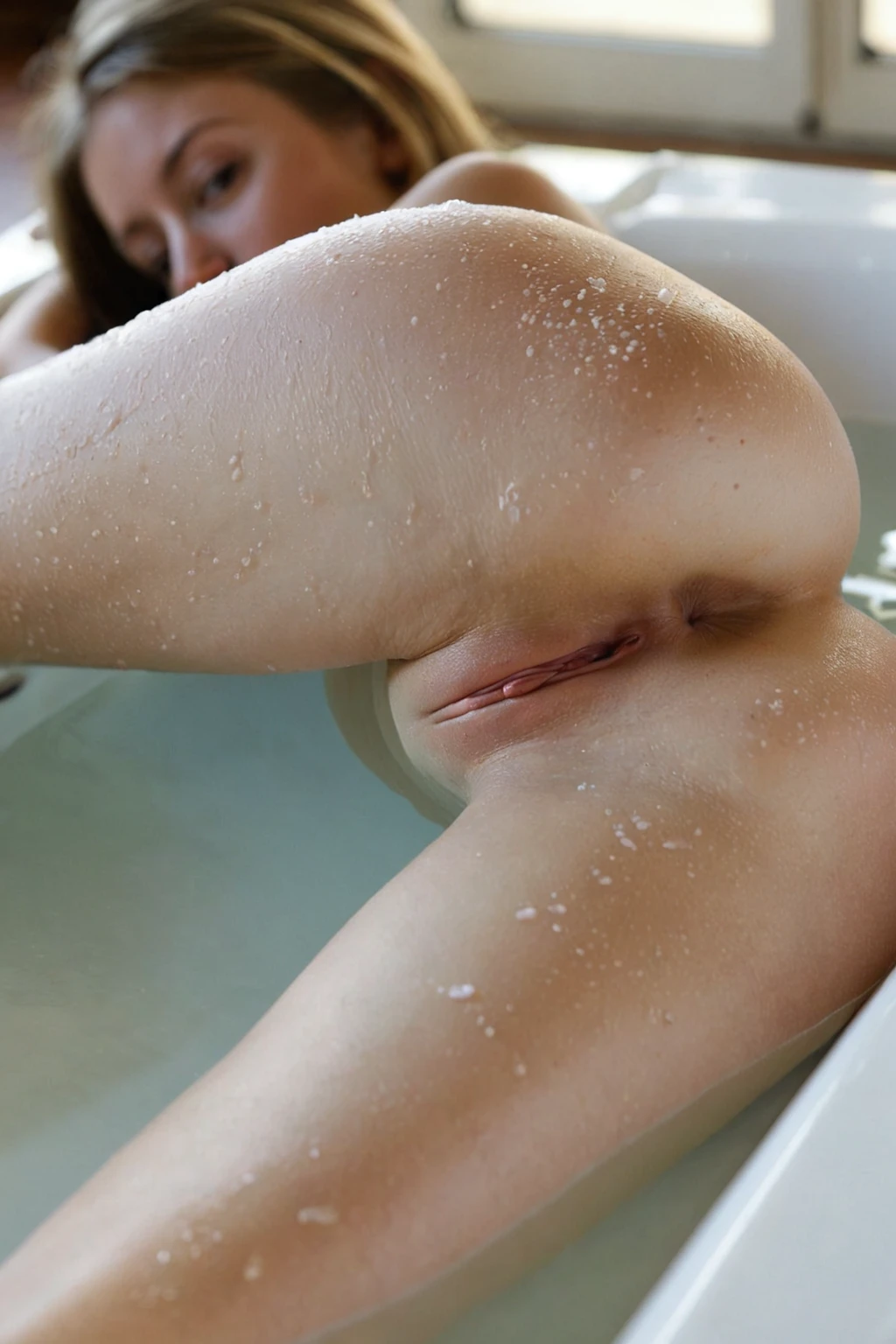
Here is what that range looks like in practice:
prone bone example 1
prone bone example 2
prone bone example 3
prone bone example 4
prone bone example 5
prone bone example 6
prone bone example 7
prone bone example 8
prone bone example 9
prone bone example 10
prone bone example 11
prone bone example 12
prone bone example 13
prone bone example 14
prone bone example 15
prone bone example 16
There are 27 in total on the prone bone gallery.
Combination Notes
Prone bone is a position, and a body can only be in one position at a time. Pick it together with another position category and only one of them shows up in the image — the platform does not try to blend two conflicting postures into a single body. Pair it instead with the things that stack cleanly: setting, wardrobe, look, mood.
Penetration from behind needs someone doing the penetrating, so this act includes a male partner in your generations by default. There is a control for leaving him out, and it is worth knowing what it costs you: without him the image is a woman lying face-down, which is a fine picture but no longer the act this category names.
Not to Be Mistaken For
The categories readers most often confuse with this one, or deliberately generate next to it:
Category What it actually is
--- ---
prone bone (this guide) you lie flat face-down on your stomach, penetrated from behind while flat
cowgirl you straddle and ride the person who lies on their back, you are on top and upright
doggy style penetration from behind while you are on all fours or bent forward, penetrator kneeling behind you
missionary you on your back, legs spread or around them, penetrated from on top face-to-face
Reader Questions
Is prone bone just doggy style lying down?
No, and the difference is the lift. Doggy carries her weight on hands and knees with the spine arched; prone bone depends on there being no lift at all. Same direction of entry, opposite body line.
Do I have to describe the pose myself?
No. The wording shown above is assembled from your category picks — there is nothing to type and nothing to phrase correctly.
What do the finished images come back as?
WebP at 1312x1968. The tall frame exists for this kind of category specifically: a full-length body lying flat needs the height.
Some results look more illustrated than photographic. Can I see only the realistic ones?
Yes — the photoreal-only prone bone selection filters the category down to that end of the range.
Where to Go Next
The nearest neighbours, if you want to compare the read side by side:
- How to generate cowgirl AI images
- How to generate doggy style AI images
- How to generate missionary AI images
Every category guide is indexed on the blog.