
How to Generate Irish AI Images — Complete Guide
Red hair against pale skin is one of the few colour pairings that changes character with the light around it. Put it under hard, contrasty light and the freckles turn to speckle. Put the same face in soft grey daylight and they read as skin — fine, scattered, believable. That difference is worth knowing before you generate anything in this category, because it is the difference between a picture that reads as Irish and one that reads as a wig. Thirty finished frames are sitting in the irish gallery, and the generator opens with the category already ticked.
Reading an Irish Image
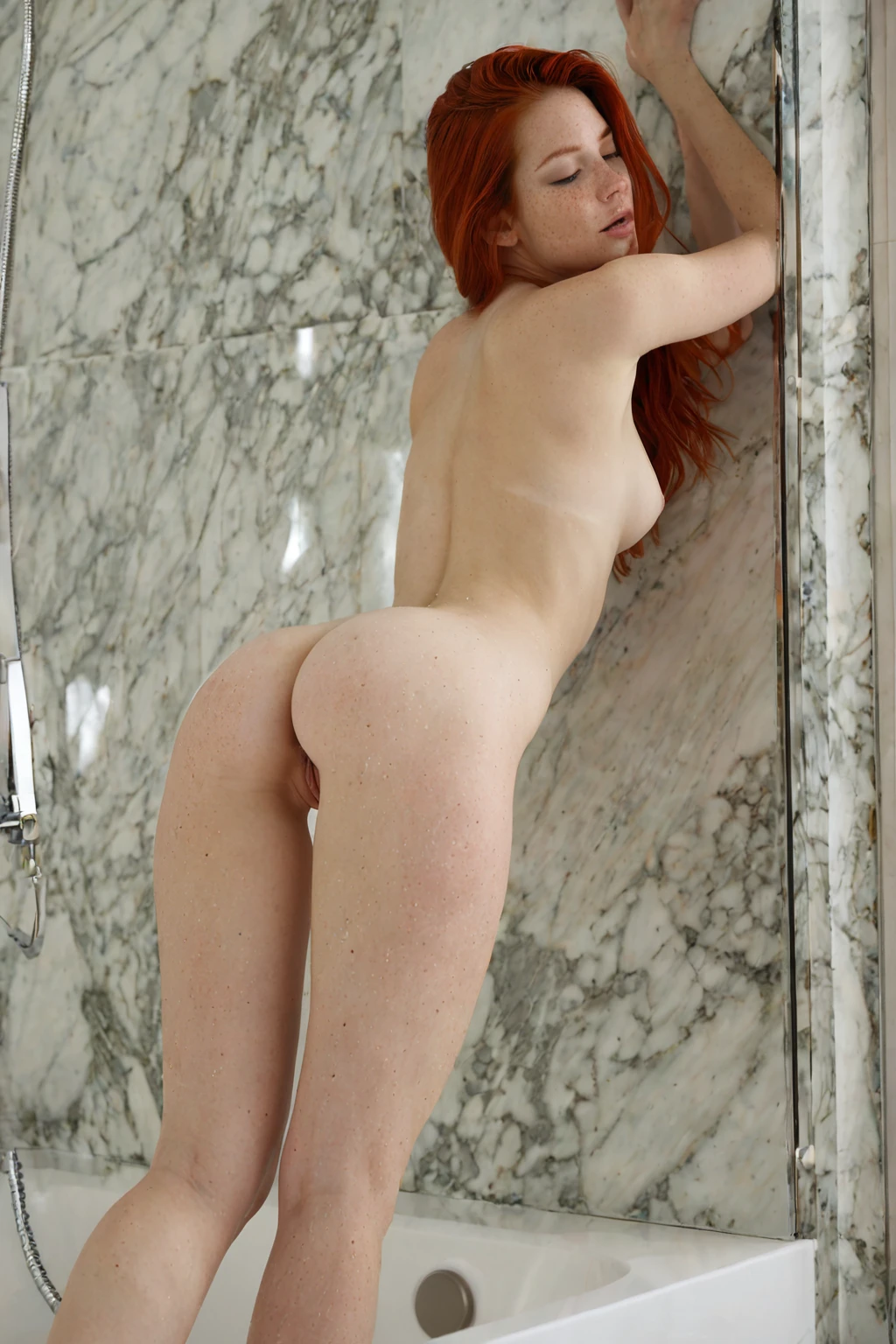
The category resolves to one subject: a beautiful Irish woman with pale skin, red hair and freckles. Three traits, all present, all legible. Not two of three.
What makes it a tight category rather than a loose regional label is that the freckles carry equal weight with the hair. A redhead with clear, even skin is a redhead. A freckled woman with dark hair is something else again. Both are perfectly good images and neither is this one. When you scan a finished frame, the fastest check is to look at the bridge of the nose and the tops of the cheeks before you look at anything else — that is where freckles either exist or quietly don't, and it is the detail that decides whether the other two traits are doing their job together or separately.
Sixteen from the Set
irish example 1
irish example 2
irish example 3
irish example 4
irish example 5
irish example 6
irish example 7
irish example 8
irish example 9
irish example 10
irish example 11
irish example 12
irish example 13
irish example 14
irish example 15
irish example 16
That is sixteen of the thirty on the irish gallery page. If you want the photoreal frames on their own, the realistic irish style narrows the same category down to those.
Example Prompt Material
You never type any of this. Picking the category is the whole interaction — the description gets built for you. But it is useful to see what your pick actually contributes, because it explains why some combinations hold and others fight each other.
Irish adds exactly one clause:
```text
beautiful Irish woman with pale skin and red hair freckles
```
Compact, and deliberately so. Subject, origin, skin, hair, freckles — five things in one breath, with no adjectives spare for the description to drift into. That density is why the look holds steady from one generation to the next.
On its own that clause describes a person, not a picture. The scene comes from whatever else you tick. Select irish alongside a scene category and the platform stitches the two together: your ethnicity clause supplies the subject, the scene category supplies everything about the shot. Pick cum-in-mouth as the second category, for instance, and the scene half of the composition looks like this:
```text
POV full-body shot of a young woman alone with her mouth wide open and full of thick white cum, (cum in mouth, cum pooled on her tongue, cum on lips:1.3), looking up at the camera with a satisfied smile, hands on her own thighs, full body visible, bright soft lighting, female alone in frame, no other people
```
Read that next to the Irish clause and the division of labour is obvious. The scene category is doing framing, pose, lighting and action — POV, full body, bright soft light. The ethnicity clause is doing the person. cum-on-ass works the same way, trading the POV angle for a rear three-quarter view with the subject looking back over her shoulder. Neither one touches the pale skin, the red hair or the freckles, which is why you can move between scenes without losing that defining look.
The keywords irish and ireland are the ones tied to this category. Lean on them when you are steering mood or setting rather than the subject — they pull toward the cultural and geographic feel without pinning the shot to a real place.
From Pick to Picture
1. Open the Generate page and choose irish. That one selection starts everything; the description assembles itself from there.
2. Add whatever scene, style or mood categories you want on top. Check the frame before you commit — nobody else is in it unless you ask for company.
3. Start the generation. A single image costs 15 credits, a set of five costs 68, and a set of ten costs 120 — the bigger sets are the better deal if you plan to cull afterwards.
4. Results land in your gallery as WebP files at 1312x1968. Tall enough for a full-body composition with headroom, and light enough that a packed gallery stays manageable. There is no export step to run and nothing to download separately.
What Trips People Up
Freckles are the first casualty. They are a finer detail than skin tone or hair colour, easy to miss when you are skimming thumbnails, and a frame can lose them entirely while still looking broadly right. Zoom in on the close-ups. Freckles should be visible across the nose and cheeks, not merely implied by pale skin.
The second failure is subtler: a result where the red hair is doing all the work. If the skin has warmed up, or the freckles have thinned out to nothing, what you have is a redhead — a good image, but not this category. Check the three traits together rather than one at a time.
Last, confirm the subject reads as a woman and reads as Irish in the context of the scene. The category is specific on both counts. An ambiguous frame won't match what you picked even when the skin, hair and freckles all land.
Telling Irish Apart
The neighbouring categories are close in the menu and nowhere near each other on screen:
Category What it actually is
--- ---
irish (this guide) Beautiful Irish woman with pale skin and red hair freckles
middle eastern Middle Eastern woman, olive skin, dark eyes
arab Arab woman, olive skin, dark features
persian Persian woman, olive skin, dramatic dark eyes
Every other row on that table is built on olive skin and dark eyes. Irish is the only one running on pale skin and red hair, which makes skin tone and hair colour together the fastest tell if you are flipping between categories to compare.
What Combines Cleanly
Ethnicity is the one slot where you only get a single answer. Tick irish and another ethnicity and only the first of them turns up in the render, so treat this as your one locked choice and build outward from it.
Everything outward combines freely, and the wardrobe end of that is where the category gets interesting. Traditional green-and-gold styling leans on the cultural read directly. A plain cotton summer dress does the opposite: with no costume carrying the theme, the skin, hair and freckles have to carry it alone — which is the honest test of whether the look came through. Alternate between the two across a batch and you will see immediately how much of the read is coming from wardrobe and how much from the subject.
Framing pulls in a similar direction. Tight and close puts the freckles front and centre. Wider trades that detail for context, letting hair and skin tone play against a full outfit or a larger set.
Lighting moves the mood further than anything else on the list. Soft overcast daylight flatters pale skin and keeps freckles looking natural rather than stamped on. Stormier, higher-contrast light does the reverse — more drama, red hair popping against deeper shadow, some of the skin's softness lost in the trade. Warm pub-like interiors read cosy and lived-in; open rural backdrops read fresh and outdoor. Whichever you take, the three traits stay the anchor, and every other choice should be working with them.
Asked and Answered
Do I have to add freckles separately?
No. Freckles are part of the category's definition alongside the pale skin and red hair — one pick covers all three. There is nothing extra to switch on.
Can I put a male partner in the scene?
Nobody else is in the frame unless you ask for it. The generator carries a male-partner toggle for exactly that, and switching it on puts him in the shot explicitly.
Can I combine irish with another ethnicity?
Not usefully. Pick two and only the first one shows up in the finished image, so choose the one you want and spend your other picks on scene, wardrobe and mood instead.
How is the realistic style different from the category itself?
Same subject, narrower filter. The realistic irish style keeps the photoreal frames and drops the rest, while the main category spans the wider range you can see in the gallery above.
Nearby Guides
The closest categories each have a walkthrough of their own:
- How to generate middle eastern AI images
- How to generate arab AI images
- How to generate persian AI images
The whole set is indexed on the blog index. When you want to make your own, the generator is one click away.